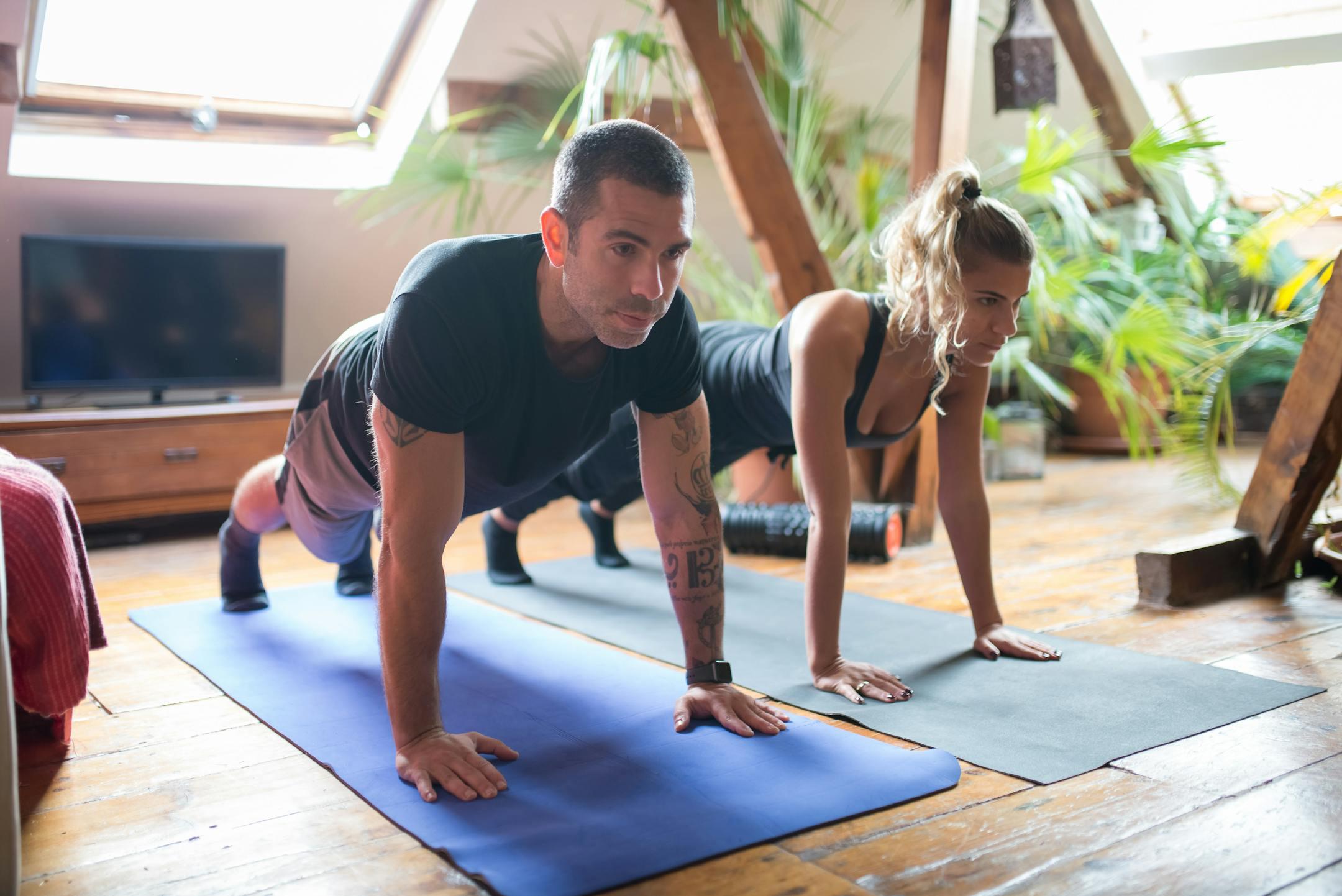
Bodyweight Workouts: Strength in Simplicity
Bodyweight exercises use your own weight as resistance, making them versatile and accessible for all fitness levels. Movements like push-ups, squats, lunges, and planks challenge muscles without the need for gym equipment.
✅ Pros:
✔ Convenience: No equipment required—train anywhere!
✔ Improves Functional Strength: Enhances mobility, coordination, and real-world movement patterns.
✔ Core Stability & Balance: Engages stabilizing muscles for better overall control.
✔ Joint-Friendly: Lower impact compared to heavy weights, reducing injury risk.
❌ Cons:
❌ Limited Progressive Overload: Harder to continually increase resistance.
❌ Muscle Growth Slower: Without external weights, hypertrophy takes longer.
❌ Strength Gains Plateau: At advanced levels, bodyweight exercises may not provide enough resistance.
💡 Maximizing Bodyweight Strength Gains:
- Increase Time Under Tension: Slow down reps and focus on control.
- Modify Movements: Advanced variations like one-arm push-ups or pistol squats add challenge.
- Incorporate Explosive Movements: Jump squats and plyometric push-ups recruit more muscle fibers.
Weighted Workouts: The Strength Accelerator
Weight training introduces external resistance using dumbbells, barbells, kettlebells, or machines. It’s a proven method for muscle hypertrophy and raw strength development.
✅ Pros:
✔ Progressive Overload: Easily increase weights for continued gains.
✔ Maximum Muscle Growth: Resistance training stimulates muscle hypertrophy efficiently.
✔ Greater Strength Gains: Heavy loads push muscle fibers to adapt and grow stronger.
✔ More Targeted Training: Isolate specific muscles for balanced development.
❌ Cons:
❌ Requires Equipment: Access to weights or gym is needed.
❌ Higher Injury Risk: Improper form or excessive loads can lead to strains.
❌ Less Functional Strength: While effective, some weightlifting movements don’t always translate into real-world movement patterns.
💡 Maximizing Weighted Strength Gains:
- Follow a Progressive Overload Plan: Gradually increase weight or reps each session.
- Use Compound Movements: Squats, deadlifts, and presses engage multiple muscle groups for efficient gains.
- Optimize Recovery: Prioritize sleep, nutrition, and rest days for muscle repair.
Which One Builds More Strength?
For absolute strength gains, weighted workouts have the edge due to progressive overload and muscle fiber recruitment. However, bodyweight training builds endurance, mobility, and functional strength, making it essential for overall athleticism.
The best approach? Combine both—bodyweight exercises for control and mobility, weight training for raw power and growth.
Final Takeaway: Build Strength Your Way
Both bodyweight and weighted workouts can transform your strength—the key is consistency and progression. Whether you prefer the simplicity of calisthenics or the power of heavy lifting, make sure your routine challenges your muscles and pushes you to grow.
🔥 Try blending both styles for the ultimate strength-building plan!
Would you like a customized hybrid workout plan combining both training styles? Let’s optimize your fitness journey! 🚀💪