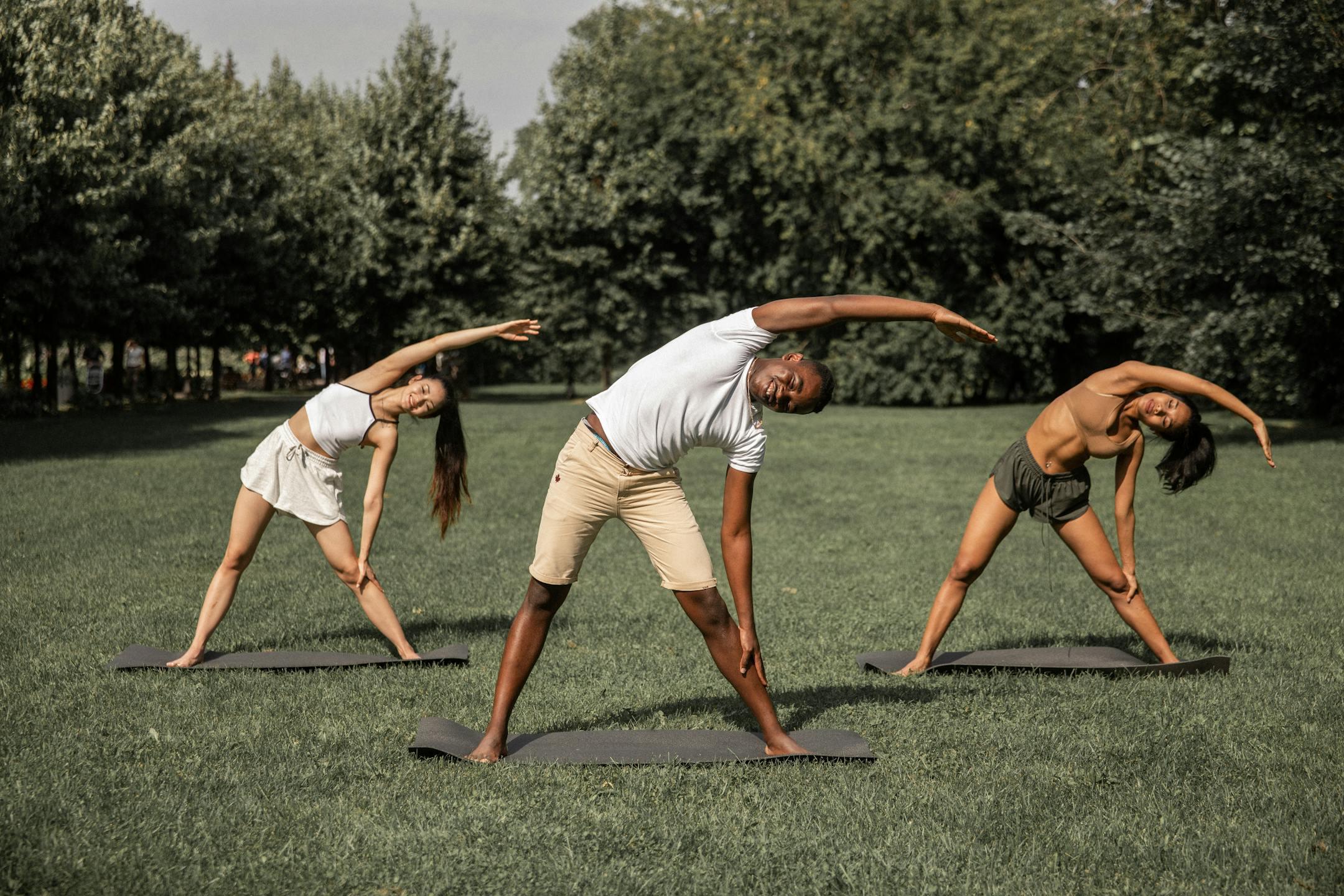
The Importance of Flexibility Training:
- Injury Prevention: Flexible muscles are less prone to tears, strains, and other injuries. Stretching improves range of motion, reducing stress on joints and ligaments.
- Enhanced Recovery: After intense workouts, stretching helps muscles recover faster by increasing blood flow and reducing tension.
- Improved Posture: Tight muscles can cause poor posture and discomfort. Stretching realigns the body and promotes better posture.
- Increased Performance: Flexible muscles and joints allow for smoother movements, boosting athletic performance.
- Stress Relief: Stretching helps relax the body and mind, easing stress and improving mental focus.
15 Effective Stretches for Injury Prevention and Recovery:
- Hamstring Stretch: Sit with one leg extended and the other bent. Reach for your toes to loosen tight hamstrings.
- Quadriceps Stretch: Stand and pull one foot toward your glutes, keeping your knees aligned for a deep quad stretch.
- Cat-Cow Stretch: On all fours, alternate arching and rounding your back to stretch and mobilize your spine.
- Child’s Pose: Kneel and stretch your arms forward, lowering your torso to relax the lower back and hips.
- Standing Forward Bend: Reach for your toes while standing to stretch your hamstrings and lower back.
- Seated Spinal Twist: Sit with one leg crossed over the other and twist your torso for a gentle spinal stretch.
- Butterfly Stretch: Sit with the soles of your feet together and knees out to stretch your inner thighs.
- Hip Flexor Stretch: Lunge forward with one knee bent and the opposite leg extended to stretch the hips.
- Chest Opener: Stand or kneel, clasp your hands behind you, and gently pull back to stretch the chest.
- Shoulder Stretch: Extend one arm across your chest and use the opposite hand to deepen the stretch.
- Calf Stretch: Press your heel into the ground while leaning forward to loosen your calves.
- Side Stretch: Extend one arm overhead and lean to the opposite side to stretch your obliques and shoulders.
- Figure Four Stretch: Lie on your back and cross one ankle over the opposite knee to stretch the glutes and hips.
- Neck Stretch: Tilt your head gently to each side, stretching the neck and upper traps.
- Pigeon Pose: Sit with one leg bent forward and the other extended backward for a deep hip stretch.
Conclusion:
Flexibility training is an investment in your health and fitness success. Regular stretching not only reduces the risk of injury but also enhances recovery and overall performance. Incorporate these 15 stretches into your routine to reap the full benefits and keep your body in peak condition. Remember, consistency is key—stretch it out and feel the difference!